What Are Software Bugs? Types, Causes, and Famous Real World Examples

A single misplaced character can stop an app from opening. A wrong assumption can send a spacecraft off course. A rare timing issue can turn a medical device into a danger. Software bugs range from tiny annoyances to failures with real-world costs, which is why finding and fixing them is one of the most important parts of software development.
A software bug is an error, flaw, or unexpected behavior in a program. It happens when software does something it should not do, fails to do something it should do, or works correctly in one situation but breaks in another.
Some bugs are easy to spot, like a button that does nothing. Others hide for years because they only appear under unusual conditions, such as a leap year date, a full memory buffer, a slow network, or two systems sending data at the same time.

What a software bug really means
A bug is a gap between what the software is supposed to do and what it actually does.
That gap can come from many places:
The code may contain a mistake.
The requirements may be unclear.
The software may not handle unusual input.
Two parts of a system may not communicate correctly.
The environment may change after the software is released.
A bug does not always mean the programmer was careless. Modern software is complex. A mobile app might depend on an operating system, cloud services, payment tools, location data, device permissions, third-party libraries, and network conditions. A small change in one layer can reveal a weakness in another.
Bugs also exist at different levels. Some are visible to users, like a broken checkout form. Some affect performance, like an app that gets slower over time. Some affect security, like a flaw that lets someone access data they should not see. Others appear only inside logs, silently causing incorrect calculations or missing records.
The key point is simple: bugs are not just technical problems. They are user experience problems, safety problems, trust problems, and sometimes business problems.
The main types of software bugs
Most bugs fit into a few broad categories. The names help developers understand where to look and how to fix the problem.
Syntax errors stop the code from running
A syntax error happens when code breaks the grammar rules of a programming language. Just as English has rules for sentence structure, every programming language has rules for how commands must be written.
A simple example in JavaScript:
```js
console.log("Hello world"
```
This line is missing a closing parenthesis. The program cannot understand it, so it stops before it runs.
Syntax errors are usually caught quickly by code editors, compilers, or automated checks. They are often the easiest bugs to fix because the tool can point to the exact line where the problem appears.
Common syntax errors include:
Missing punctuation
Unclosed quotation marks
Misspelled language keywords
Incorrect indentation in languages where spacing matters
Mismatched brackets or parentheses
Syntax errors are frustrating, but they are usually not the most dangerous type of bug because they tend to block the program before users ever see it.
Logic errors make the wrong thing happen
A logic error happens when the code runs, but the instructions produce the wrong result. The program understands the code, but the code does not match the intended behavior.
Imagine a store offers free shipping on orders of $50 or more. A developer writes this condition:
```js
if (orderTotal > 50) {
applyFreeShipping();
}
```
That looks close, but it excludes orders that are exactly $50. The correct condition should be:
```js
if (orderTotal >= 50) {
applyFreeShipping();
}
```
This is a classic logic bug. Nothing crashes. No warning appears. The software simply makes the wrong decision.
Logic errors can be hard to detect because the program may look healthy. Users may only notice when a specific case fails. These bugs often appear in calculations, permissions, discounts, reports, search filters, recommendations, and business rules.
Runtime errors happen while the program is running
A runtime error appears after the program starts. The code may be valid, but something goes wrong during execution.
For example, a program might try to open a file that does not exist. A web app might request data from a server that is temporarily unavailable. A mobile app might try to use the camera after the user denies camera permission.
Runtime errors often depend on real-world conditions:
Network failures
Missing files
Full storage
Invalid user input
Expired sessions
Unavailable services
Memory limits
Good software expects some of these problems and handles them gracefully. Instead of crashing, it might show a helpful message, retry the action, save progress, or offer another path.
Other common bug categories
Syntax, logic, and runtime errors are the big three, but many bugs fall into other useful groups.
Performance bugs make software slow, resource-heavy, or unresponsive. A page might load correctly but take too long.
Security bugs expose systems or data to unauthorized access. These can be serious even if users do not notice anything wrong.
Compatibility bugs happen when software works in one browser, device, operating system, or version but fails in another.
Integration bugs appear when separate systems exchange data incorrectly. One system may send dates, currencies, names, or IDs in a format another system does not expect.
Concurrency bugs happen when multiple actions occur at nearly the same time. These are common in systems that handle many users or background tasks at once.
Why software bugs happen
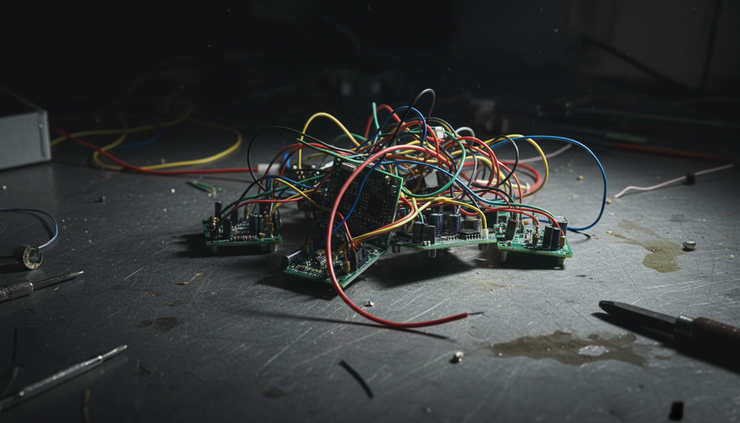
Bugs rarely have one simple cause. They usually grow from a mix of human error, complexity, pressure, and unexpected conditions.
Coding mistakes are only part of the story
Some bugs come from straightforward coding mistakes. A developer may use the wrong variable, copy code from one place to another and forget to update it, or misunderstand how a library works.
Common coding mistakes include:
Off-by-one errors, where a loop runs one time too many or one time too few
Incorrect assumptions about empty values
Confusing similar variable names
Forgetting to handle errors
Using outdated code examples
Changing one part of a system without updating another
These mistakes are normal. Developers are human, and software often involves thousands or millions of lines of code. That is why teams use code reviews, automated tests, and static analysis tools to catch problems before release.
Requirements can be unclear or incomplete
A developer can write code perfectly and still build the wrong thing if the requirement is vague.
For example, a requirement might say, “Users can reset their password.” That sounds simple, but it raises many questions:
How long should the reset link work?
Can a user request multiple links?
What happens if the account does not exist?
Should the system reveal whether an email is registered?
What security checks are required?
When these details are missing, developers make assumptions. Some assumptions will be wrong. Those wrong assumptions become bugs.
Unexpected user behavior reveals hidden flaws
Users do not always follow the happy path. They double-click buttons, paste strange characters into forms, lose internet access mid-payment, rotate their phones, open the same account in two tabs, or leave a page open overnight.
That behavior is not “wrong.” It is part of real use.
A well-tested app handles odd behavior without breaking. It validates input, prevents duplicate actions, saves state, and gives clear feedback. A fragile app assumes every user will follow the perfect path every time.
Unexpected user behavior is one reason testing needs more than checking whether the main feature works. Testers look for edge cases, unusual inputs, timing problems, and recovery paths.
Systems change after release
Software lives in changing conditions. A bug can appear after a release even if the same feature worked yesterday.
A browser update can change how a page behaves. A payment provider can alter an API response. A database can fill up. A certificate can expire. A traffic spike can expose a slow query. A time zone or daylight saving time change can break date logic.
This is why monitoring matters. Teams need to know when error rates rise, pages slow down, or users fail to complete key steps.
Famous software bugs and what they teach
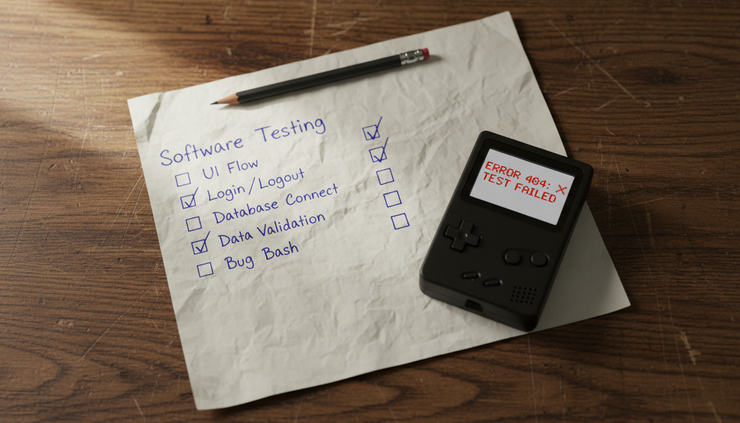
Some bugs became famous because they caused public failures, financial losses, safety problems, or widespread concern. These examples show why bug detection is not a minor technical chore.
The Ariane 5 rocket failure showed the cost of reused assumptions
In 1996, the European Space Agency’s Ariane 5 rocket failed shortly after launch. A software issue caused by a data conversion overflow played a key role. Code reused from the Ariane 4 system did not fit the new rocket’s flight conditions.
The rocket was destroyed, along with its payload.
The lesson is clear: reused code still needs fresh testing. Software that works in one environment may fail in another when speed, scale, input range, or timing changes.
The Mars Climate Orbiter showed why units matter
NASA’s Mars Climate Orbiter was lost in 1999 after a mismatch between measurement units. One team used English units, while another expected metric units. The spacecraft entered Mars’ atmosphere incorrectly and was lost.
This was not a typo in the usual sense. It was an integration and communication failure. The software did not protect the mission from inconsistent assumptions between systems.
The lesson: interfaces need precise contracts. When systems exchange data, they must agree on units, formats, limits, and meaning.
The Therac-25 incidents showed the danger of safety-critical bugs
The Therac-25 was a radiation therapy machine used in the 1980s. Software and design problems contributed to incidents where patients received massive radiation overdoses. Some patients died or suffered severe injuries.
This case remains one of the most serious examples in software safety discussions. It showed the danger of relying on software without enough safeguards, testing, and failure handling.
The lesson: in safety-critical systems, software bugs can harm people. Testing, hardware interlocks, clear error messages, and strict review processes matter.
The Y2K bug showed how small date choices can scale
The Y2K bug came from storing years with two digits, such as `99` instead of `1999`. Many systems risked interpreting the year 2000 as 1900.
The world spent years preparing. Many major failures were avoided because organizations found and fixed the problem before the date changed.
Y2K is often remembered as overhyped, but that misses the point. The reason it did not become a global disaster is that people took it seriously and fixed many systems in advance.
The lesson: old shortcuts can become future bugs. Date handling, data formats, and storage decisions can last much longer than expected.
The Knight Capital incident showed deployment bugs can be costly
In 2012, Knight Capital experienced a major trading failure linked to software deployment and configuration problems. The incident caused huge financial losses in a short time and damaged confidence in the firm.
This was not just a bad line of code. It involved how software was released and controlled across systems.
The lesson: deployment needs discipline. Teams need rollout plans, safeguards, monitoring, and ways to stop faulty behavior quickly.
Heartbleed showed silent bugs can affect security
Heartbleed was a serious vulnerability discovered in OpenSSL in 2014. It allowed attackers to read parts of memory from affected systems, which could expose sensitive data.
Many users never saw an error message. Websites still loaded. Systems appeared normal. The risk existed under the surface.
The lesson: some bugs do not break features. They break trust. Security testing and careful review of widely used libraries are essential.
How teams find and fix bugs
Bug detection works best when it happens throughout development, not only at the end.
Developers and testers use several methods:
Unit tests These check small pieces of code in isolation.
Integration tests These check whether parts of a system work together.
End-to-end tests These simulate real user flows, such as signing up or completing a purchase.
Code reviews Other developers read changes before they are merged.
Static analysis Tools scan code for risky patterns, syntax issues, and possible errors.
Manual testing Humans explore the software, try unusual paths, and check how it feels to use.
Monitoring Teams watch live systems for crashes, slow responses, failed requests, and unusual behavior.
When a bug is found, the best fix starts with reproduction. A developer needs to make the bug happen reliably, or at least understand the conditions that trigger it. Then the team can isolate the cause, change the code, test the fix, and check that the same bug does not return.
That final check is called regression testing. It protects old features when new changes are added.
A strong bug report helps a lot. It should include:
What happened
What should have happened
Steps to reproduce the issue
Device, browser, or system details
Screenshots, logs, or error messages when useful
How often the problem occurs
Good bug reports save time because they turn a vague complaint into something a team can investigate.

Bugs are part of software, but ignoring them is a choice
No serious software team can promise zero bugs. Software changes too often, systems depend on too many moving parts, and real users create conditions no test plan can fully predict.
The goal is not perfection. The goal is to reduce risk.
That means writing clear requirements, testing early, reviewing code, handling errors, watching live systems, and treating user reports as useful signals. It also means fixing the cause, not just hiding the symptom.
Software bugs are small clues that something in the system, the process, or the assumptions needs attention. When teams respond well, they build software that is safer, more reliable, and easier to trust.



Comments